

Debenhams owner Boohoo Group (AIM:DEBS) has sold the automation equipment in its Sheffield distribution centre and reassigned the lease to Primark Stores Limited for a total of £90 million in cash. The firm has already banked £76.5 million of that, received on completion, with the remaining £13.5 million to be received on vacant possession early next year.
The deal has helped the company to significantly reduce its borrowings, with net debt now expected to be negligible at the year-end in February 2027. In contrast, net debt was £93.3 million at the end of February this year.
That’s not the only effect, with depreciation expected to reduce by c.£12 million per annum (£3 million of which related to a right-of-use asset), interest will reduce by at least £10 million per annum and cash lease costs will reduce by c.£4 million per annum.
The Sheffield facility was a critical piece of infrastructure for the group, with significant investment made over many years. To cover its loss Boohoo is now entering into an agreement with a global third-party logistics provider that will enable it to continue to fulfil its stocked products, in the company’s words, “as efficiently as it does today”. It will also allow the firm to scale its Delivered by Debenhams fulfilment proposition beyond fashion.
The Business
Debenhams Group is an online platform for fashion, home and beauty, serving millions of customers across five shopping destinations: Debenhams, Karen Millen, boohoo, MAN and PLT (Pretty Little Thing). Debenhams Group dates back to 1778 when William Clark, a retail pioneer of the time, opened the UK's first department store. Boohoo acquired Debenhams out of administration in 2021. Today, Debenhams is branded by the firm as “Britain's online department store”, sitting alongside its fashion-led marketplaces.
The investment case is very much a turnaround story, the business having had a torrid few years after 2020 (both before and after the Debenhams purchase). The shares collapsed from a peak of just over 400p in June that year to a low of just over 10p last November, to now stand at 23.5p.
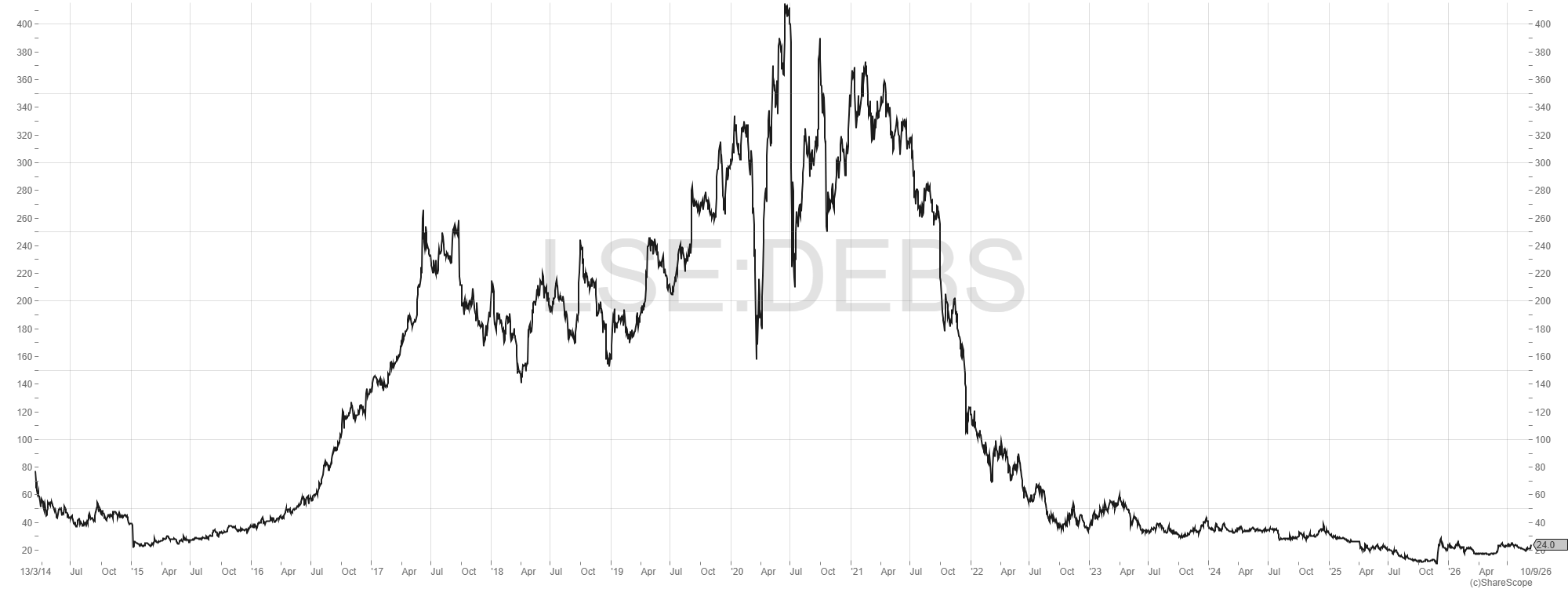
Boohoo share price since IPO chart
For FY2025 the business posted a peak statutory pre-tax loss of £352.5 million. However, following the appointment of a new CEO, Dan Finley, in November 2024, a turnaround strategy has been put in place, which seems to be working well. This strategy focuses on a stock-lite and capital-lite business model, with costs having been slashed and a focus on improving margins implemented.
Results for FY2026 showed Adjusted EBIT returning to profit at £7 million (from a £30.5 million loss), with the loss before tax narrowed by 69.2% to £108.6 million (from £352.5 million). Every brand was said to now be profitable at the Adjusted EBITDA level. Notably, the Pretty Little Thing business, which was going to be disposed of at one point, swung to a £14 million Adjusted EBITDA profit from a previous £1 million loss.
In mid-July, Boohoo announced that trading had continued to be positive through June and July following two upgrades to guidance in the previous nine months. Gross Merchandise Value (GMV) - all merchandise sold to customers after cancellations and returns, including VAT, carriage receipts and premier subscription income - continues to grow year on year, margins are up and returns are down. In the medium term, the opportunity is seen for the Debenhams brand to become a £multi-billion GMV business with a £100 million+ EBITDA.
As previously announced, the group returned to GMV growth in Q1 and in today’s update it was confirmed that growth accelerated in Q2. Investors will get more information in an H1 trading update which will be announced next Thursday, 17th September.
Sign up to receive our full investment research notes on small cap growth companies, as soon as they are published.
Disclosures
Debenhams is not a corporate client of Optimo Research Ltd.
Disclaimers
This article, and all articles on the Optimo Research blog, are for information purposes only. Our blog articles do not constitute an investment recommendation or personal advice. Nothing in our blog articles should be construed as an offer or the solicitation of an offer to buy or sell securities by us and, as we have no knowledge of your individual situation and circumstances, you should not make any investment decision without consulting a fully qualified financial adviser. Your capital is at risk by investing in the financial instruments issued by the companies discussed. For full disclosures, disclaimers and risk warnings click here.